Buying Call Options: a cheaper way to make money from rising stock prices
Buy Call options when stock prices are rising and you'll often make 50-100% return on your money in a matter of days or weeks.
I know it sounds completely unbelievable which is why I don’t want you to believe a word I am saying about options…I want you to believe your real world results…
I want you to do what the U.S. Army taught me...trust, but verify…
I want you to verify everything I’ve told you about options by using the semi-automated strategy taught in this free web based options course.
Buying Call options is the strategy I have used most often and the one that has made me the most money.
It also requires significantly less money than buying stocks outright.
The lucrative aspect of Calls, or any stock option for that matter, is that a stock may rise upward in price by 1% and the same price movement will cause the option to rise in price by 10%.
You get more "bang for your buck".
This is one of the major reasons people trade stock options.
Buying Calls...
If you recall from the earlier lessons, a Call option gives its buyer the right, but not the obligation, to buy shares of a stock at a specified price on or before a given date.
Calls increase in value when the underlying stock it's attached to goes up in price, and decrease in value when the stock goes down in price.
A typical use for this type of stock option is to profit from an increase in the price of the underlying stock or to lock in a good purchase price if you think the stock is going to rise significantly.
**You will most likely never exercise your rights to buy the stock. You just want to benefit from the movement of the stock without having to own it.**
Risk and Reward...
Since there is no limit to how high a stock can rise the maximum profit you can make with a Call option is unlimited. As the stock continues to rise so will the value of your option.
The max you can lose with a Call is the price you paid for it. So if it cost you $200 to buy the Call that is as much as you can lose. A lot less money than what some people lose when they buy the stock outright.
Buying 100 shares of any stock will cost significantly more than buying a stock option yet you can often make the same amount of money. You'll see an example of this in the next lesson.
Advantages of Buying Call Options...
- Allows you to participate in the upward movement of the stock without having to own the stock
- You only have to risk a relatively small sum of money
- The maximum amount you can lose on a trade is the cost of the Call
- Leverage (using a small amount of money to make a large sum of money)
- Higher potential investment returns
Disadvantages of Call Options...
- The option has an expiration date so time works against you
- The stock has to make a move upward in order for the Call to increase in value
- If the stock stays flat or doesn't move, then the option will lose value due to time decay
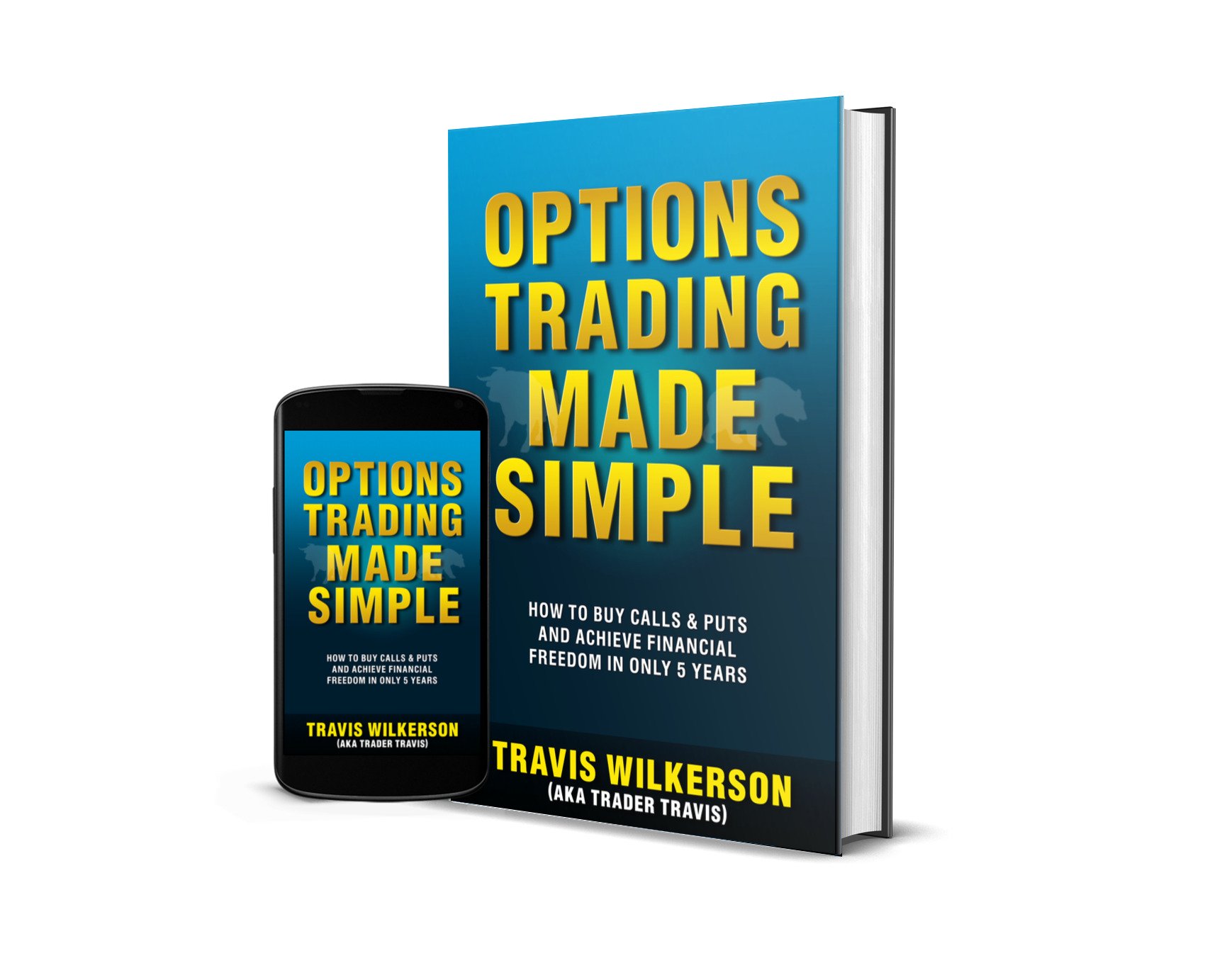
The Passive Stock Options Trading Book Series
Discover how to achieve financial freedom in only 5 years...
Read what others have to say about the book. [Amazon affiliate link]
If You're Looking For A Reliable Lower Risk Way To Be
Profitable With Options, Try The "Buffett Strategy"...
I don't know what has brought you to my page. Maybe you are interested in options to help you reduce the risk of your other stock market holdings.
Maybe you are looking for a way to generate a little additional income for retirement. Or maybe you've just heard about options, you're not sure what they are, and you want a simple step-by-step guide to understanding them and getting started with them.
I have no idea if options are even right for you, but I do promise to show you what has worked for me and the exact steps I've taken to use them to earn additional income, protect my investments, and to experience freedom in my life.
If you want to learn more, I invite you to download a FREE video case study on how to trade options like Warren Buffett.
Inside you will discover...
- How investors pay me money to buy their stock.
- How "combining option selling with option buying" resulted in a 60% growth of my account.
- The "Family Freedom Fund" strategy I use to beat the market each year (I'm an experienced investor so your results may vary).
- And lastly, there is a high risk way to trade options and a low risk way. You'll discover a low risk "sleep well at night" method of investing.
Fill in your details below to download your FREE case study. Along with your case study, you'll also get my daily emails where I share my favorite option trading strategies, examples of the trades I'm currently in, and ways to protect your investments in any market.
Wealth Building Resources
Free Video Case Study (Newsletter)
Options Trading Made Simple Book (My Kindle book)
Options Wealth Academy (High End Training Program co-founded by Travis)
Free Options Course Learning Modules
|
Module 1: Option Basics |
Module 2: Option Value |
Module 3: Basic Strategies |
|
Module 4: Stock Charts |
Module 5: Technical Indicators |
Module 6: The 7-step process I use to trade stock options |
Learn Stock Options Trading Home Page
