Buying Put Options: How to Make Money When Stocks Fall In Price
Buying Put options is how you insure your stock portfolio against a loss. And they are also used to make money when stock's fall in price.
They are essentially the opposite of Call options…
Buying Call options allow you to make money when stocks rise in price and buying Put options allow you to make money stocks fall in price.
You see, most investors watch the stock market fall in price and complain about how much money they are losing.
During these times, buy-and-hold and dollar cost averaging doesn't seem to soothe the soul.
As a buy-and-hold investor you feel completely helpless during market crashes.
And while you are feeling helpless there are other investors that are happy and worry free because they insured their stock portfolios with Put options.
By using this relatively unknown investment tool you feel more in control because you are able to make money on the way down.
Put options are a way to profit from a downturn in the stock market without shorting the stock. Short selling is beyond the scope of this lesson however if you understand the concept of shorting stocks it will help you to understand the power of Put options.
In the previous two lessons we discussed how Put options are used as a hedge (insurance) against a decline in stock price. This lesson focuses on yet another use, buying Put options to trade them for a profit.
You are going to buy Put contracts that you think will increase in value. Once they do increase in value you will sell them for a profit.
Buying Put Options...
A Put option gives its buyer the right, but not the obligation, to SELL shares of a stock at a specified price on or before a given date.
Buying ONLY Put's should not be confused with Married Puts or Protective Puts. Married and Protective Puts are purchased to protect shares of stock from a sharp decline in price.
The major difference between the two is with Married/Protective Puts there is "ownership in stock".
Buying Put options involves just that, buying only the Put option.
When you buy only the Put option it completely changes the dynamics of the trade. You want the stock price to fall because that is how you make your profit.
In "most" cases you never intend on exercising your rights to sell the stock. You just want to benefit from the movement of the stock without having to own the stock, and you can do this with Put options.
A Put option locks in the selling price of a stock.
So if you buy an option with a strike price of $70 this will allow you to sell the stock for $70 anytime between the day you buy the option and when it expires.
So if the stock falls to $60 your Put option will go up in value. Why, because you hold a contract that gives you the right to sell something for more than its market value.
Yes this seems unfair and logically this doesn't make sense, but this is just the nature of the terms of the option contract.
It's like baseball cards. Baseball cards are literally pieces of cardboard, yet some of them can sell for thousands of dollars because there are only a limited number of them in the world. Because only a limited number are available it makes the cards more valuable.
With a Put option you hold a contract that lets you sell something for MORE than it's worth. This makes your contract more valuable so you essentially turn it around and sell it at a higher price.
Risk and Reward...
Since a stock can fall to $0 the maximum profit you can make with a Put option is when the stock falls to $0. Put options gain value when stock prices fall and there is only so far a stock can fall in price.
In the next lesson you will see a real example and how it works, but for now let's cover the risk.
The max you can lose with a Put is the price you paid for it (that's a relief). So if the stock goes up in price your Put will lose value. So if it cost you $100 to buy the Put that is as much as you can lose.
It's better than losing thousands of dollars if you were to purchase the stock and it fell in price.
Advantages of Buying Put Options...
- Allows you to participate in the downward movement of the stock without having to own or short the stock
- You only have to risk a relatively small sum of money to buy a Put Option
- The maximum amount you can lose on a trade is the cost of the Put
- Leverage (using a small amount of money to make a large sum of money)
- Higher potential investment returns
Disadvantages of Buying Put Options...
- The Put option has an expiration date so time works against you
- The stock has to make a move downward in order for the Put option to increase in value
- If the stock stays flat or doesn't move, then the Put option will lose value due to time decay
Verifiable trade example: if you had bought a SPY Dec 2008 120 Put option on 10/1/2007 it would have cost $246.50.
You could have then sold the Put on 12/17/2008 for $2,980.
Thus realizing a profit of $2,733.50 (1,109% ROI).
These are real numbers you can verify yourself.
This is exactly why market crashes are the biggest opportunities to build wealth. Crashes are launching pads that launch you from financial struggle to financial freedom.
That's why it's been said that, "More millionaires were created during the great depression than in any other time in American history."
This is only possible because of the leverage and profit potential of Put options.
Most people only hear about the bad stuff that happened during the Great Depression. They never hear about all the Great Depression Millionaires.
Personally, I HATE losing money so I always learn first how to "not lose money" before I learn "how to make money". And buying Put options is just one of the ways you can do just that.
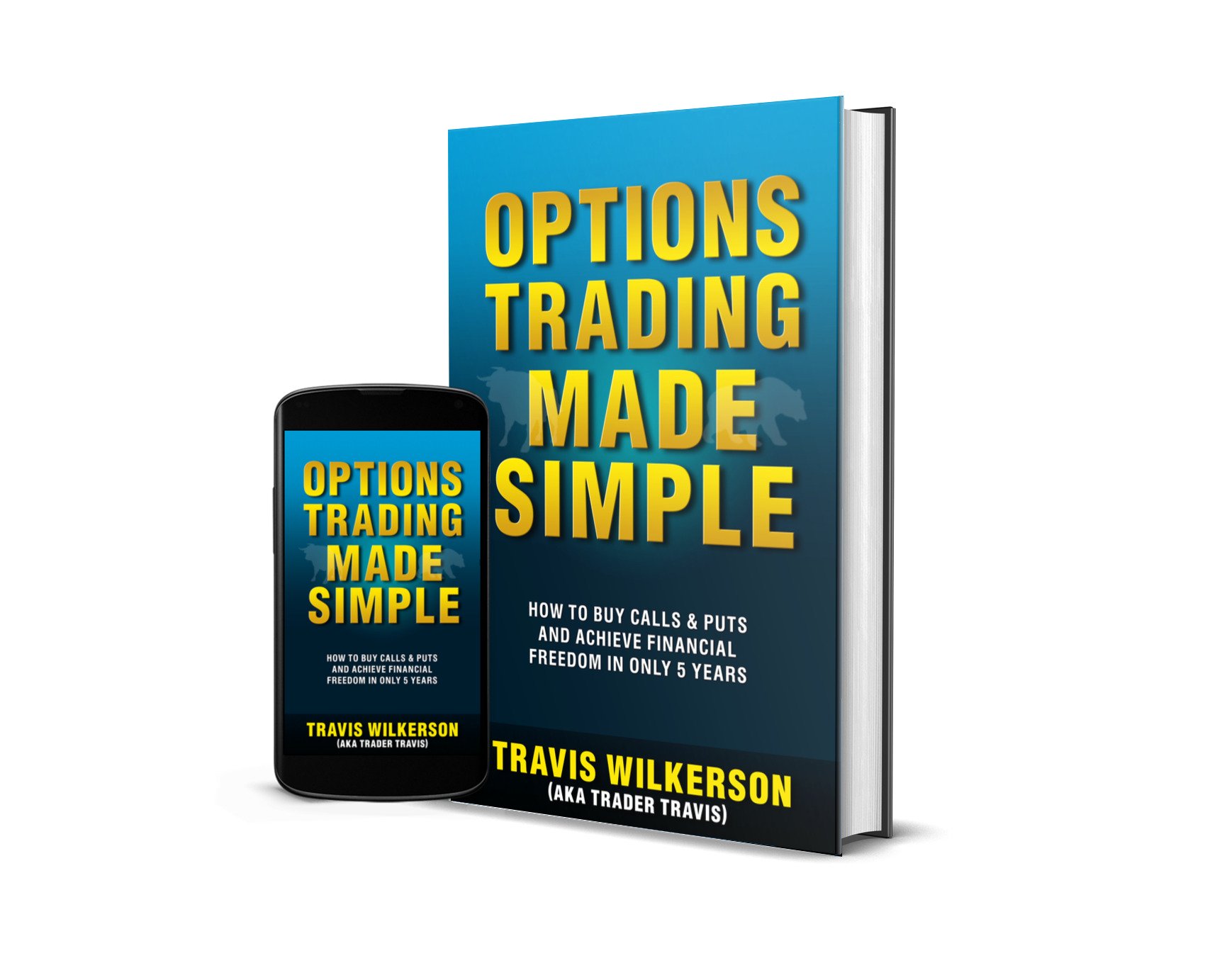
The Passive Stock Options Trading Book Series
Discover how to achieve financial freedom in only 5 years...
Read what others have to say about the book. [Amazon affiliate link]
If You're Looking For A Reliable Lower Risk Way To Be
Profitable With Options, Try The "Buffett Strategy"...
I don't know what has brought you to my page. Maybe you are interested in options to help you reduce the risk of your other stock market holdings.
Maybe you are looking for a way to generate a little additional income for retirement. Or maybe you've just heard about options, you're not sure what they are, and you want a simple step-by-step guide to understanding them and getting started with them.
I have no idea if options are even right for you, but I do promise to show you what has worked for me and the exact steps I've taken to use them to earn additional income, protect my investments, and to experience freedom in my life.
If you want to learn more, I invite you to download a FREE video case study on how to trade options like Warren Buffett.
Inside you will discover...
- How investors pay me money to buy their stock.
- How "combining option selling with option buying" resulted in a 60% growth of my account.
- The "Family Freedom Fund" strategy I use to beat the market each year (I'm an experienced investor so your results may vary).
- And lastly, there is a high risk way to trade options and a low risk way. You'll discover a low risk "sleep well at night" method of investing.
Fill in your details below to download your FREE case study. Along with your case study, you'll also get my daily emails where I share my favorite option trading strategies, examples of the trades I'm currently in, and ways to protect your investments in any market.
Wealth Building Resources
Free Video Case Study (Newsletter)
Options Trading Made Simple Book (My Kindle book)
Options Wealth Academy (High End Training Program co-founded by Travis)
Free Options Course Learning Modules
|
Module 1: Option Basics |
Module 2: Option Value |
Module 3: Basic Strategies |
|
Module 4: Stock Charts |
Module 5: Technical Indicators |
Module 6: The 7-step process I use to trade stock options |
Learn Stock Options Trading Home Page
